 |
Wireshark 5.1.0
The Wireshark network protocol analyzer
|
Loading...
Searching...
No Matches
|
Wireshark 5.1.0
The Wireshark network protocol analyzer
|
#include <theme_manager.h>
Public Types | |
| enum class | ThemeMode { System , Dark , Light } |
| enum class | PreviewScheme { Default , PreferLight , PreferDark } |
| enum | ThemeToken { BrandPrimary , AccentSuccess , AccentWarning , AccentError , AccentInfo , ExpertNone , ExpertComment , ExpertChat , ExpertNote , ExpertWarn , ExpertError , ExpertForeground , PacketsSelection , PacketsSelectionText , PacketsInactive , PacketsInactiveText , PacketsMarked , PacketsMarkedText , PacketsIgnored , PacketsIgnoredText , PacketsHidden , ConversationClient , ConversationClientText , ConversationServer , ConversationServerText , FilterValid , FilterInvalid , FilterDeprecated , FilterBusy , FilterBusyText , FilterBookmark , FilterBookmarkCapture , FilterBookmarkMatch , FilterClear , FilterApply , FilterHistory , SyntaxKey , SyntaxString , SyntaxNumber , PaletteWindow , PaletteBase , PaletteText , PaletteWindowText , PaletteAlternateBase , PaletteMid , PaletteMidLight , PaletteHighlight , PaletteHighlightedText , PaletteAccent , HeaderBackground , SectionHeader , SectionHeaderHover , FieldBorder , Separator , MutedText , HeaderText , HeaderTextMuted , UpdateBackground , UpdateBorder , UpdateText , UpdateTextHighlight , UpdateLink , UpdateLinkHover , UpdateLinkPressed , UpdateButtonBg , UpdateButtonHover , UpdateButtonPressed , UpdateButtonDisabledBg , UpdateButtonDisabledText , UpdateDismissHoverBg , UpdateDismissPressedBg , HighlightColorOrange , HighlightColorGreen , TextOnSuccess , TextOnWarning , TextOnError , TextOnInfo , TextOnFilterValid , TextOnFilterInvalid , TextOnFilterDeprecated , NoRole } |
Signals | |
| void | themeChanged () |
Public Member Functions | |
| void | cleanup () |
| ThemeInfo | info () const |
| QColor | color (ThemeToken role) const |
| bool | colorIsAvailable (ThemeToken role) const |
| QHash< ThemeToken, QColor > | previewTheme (const QString &internalName, PreviewScheme scheme) const |
| bool | validateThemeFile (const QString &filePath) const |
| QString | loadStyleSheet (const QString &name) const |
| bool | isDarkMode () const |
| ThemeMode | mode () const |
| void | setMode (ThemeMode mode) |
| QColor | graphColor (int idx) const |
| Returns the graph color for the given index, cycling through available graph colors if necessary. | |
| QColor | graphDefaultColor () const |
| qsizetype | graphColorCount () const |
| Returns the number of graph colors defined in the theme. | |
Static Public Member Functions | |
| static ThemeManager * | instance () |
| static QString | defaultThemeName () |
| static QString | resolveThemeName (const QString &name) |
| static void | init (const QString &theme=QString()) |
| static QList< ThemeInfo > | availableThemes () |
| static QString | styleSheet (const QString &name) |
| static void | setValidationState (QWidget *w, const QString &state) |
| static bool | isDark () |
Protected Member Functions | |
| ThemeManager (QObject *parent=nullptr) | |
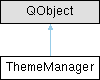
Gateway for Wireshark's theme system.
Owns the process-wide theme state (current theme, mode, token map, font choices, the platform scheme detector) and fronts the public API. Non-trivial work is delegated to helpers under ui/qt/utils/themes/, split by responsibility:
themes/theme_parser.{h,cpp} — reads theme.jsonc themes/theme_token_handler.{h,cpp} — derives Header* / Update* / … from the brand + accent inputs themes/theme_palette_builder.{h,cpp} — constructs the QPalette and pushes it via setPalette() themes/theme_stylesheet_loader.{h,cpp} — reads :/stylesheets/ and resolves wstheme(...) tokens themes/color_math.{h,cpp} — pure color-math statics (mix/darken/lighten/contrast/…) themes/system_theme_detector*.{h,cpp,mm} — platform-native OS light/dark detection.
A theme file (resources/themes/<name>/theme.jsonc) declares five mandatory colors — brand.primary and four accent.* values. Every other token the UI consumes (Header*, Section*, Update*, Packets*, Conversation*, Expert*, …) is derived from those inputs by ThemeTokenHandler at load time.
Stylesheets reference tokens via wstheme(TokenName). The loader rewrites each occurrence to the resolved #rrggbb hex value at the widget's setStyleSheet() call site.
|
strong |
Caller-visible appearance preference for previewTheme().
Mirrors the vocabulary of SystemThemeDetector::Scheme but is intentionally a separate type: previewTheme() is the only public surface that needs it, and reusing the detector enum would leak an otherwise-private dependency to the dialog.
Default — "no preference, resolve against the OS now". previewTheme() asks the system detector, which every back-end resolves to Light or Dark via its startup calibration. PreferLight — caller explicitly wants the light side. PreferDark — caller explicitly wants the dark side.
|
strong |
Selects how the app decides between the light and dark sides of the current theme.
System — follow the OS preference (default). Flips live when the user changes the OS appearance. Dark — always return the dark side, regardless of the OS. Light — always return the light side, regardless of the OS.
|
explicitprotected |
CONVENIENCE PRE-CACHING
These pre-caches make it cheap to answer "which theme.jsonc section does this token belong to?" and "which QPalette role does this palette-prefixed token map to?" at runtime. The parser and the palette builder both consult them by string name during a load.
Adding a new token only requires:
Everything else (section-to-token grouping, palette-role lookup) falls out of the Q_ENUM metaobject scanning in the loops below.
|
static |
Enumerates every theme bundled under :/themes/. For each one the JSONC file is parsed to extract its metadata (display name, author, description, internal name). Intended for populating a theme picker in the preferences dialog.
Themes whose JSONC fails to parse are skipped silently (a warning is logged by ThemeParser). The returned list is not sorted — callers that want alphabetical order should sort by display name themselves.
| QColor ThemeManager::color | ( | ThemeToken | role | ) | const |
Returns the resolved color value for a given ThemeToken in the current light/dark mode.
| role | The ThemeToken enum value, e.g. ThemeManager::HeaderBackground |
|
static |
Internal name of the theme that ships as the out-of-the-box default for the current application flavor. Returns "stratoshark" for Stratoshark builds and "wireshark" for everything else (Wireshark, future flavors without their own theme directory).
Phrased as "wireshark unless stratoshark" so a custom build that strips one flavor's theme but keeps the other still has a working default — no separate ultimate-fallback knob needed. The flavor lookup goes through application_flavor_is_wireshark() (app/application_flavor.h) so the same shared Qt code picks the right default automatically without per-app #ifdef branches.
Use this anywhere you used to write the literal "default" — init(), the recent_common fallback, the preferences picker's "currently selected" comparison, etc.
| QColor ThemeManager::graphColor | ( | int | idx | ) | const |
Returns the graph color for the given index, cycling through available graph colors if necessary.
NOTE: if no graph colors are defined, this will return an invalid QColor. NOTE: the index will be modulo'd by the number of available graph colors, so callers can safely pass any index and it will cycle through the defined colors.
| idx | the index for the graph color. |
| qsizetype ThemeManager::graphColorCount | ( | ) | const |
Returns the number of graph colors defined in the theme.
| ThemeInfo ThemeManager::info | ( | ) | const |
Returns metadata about the currently loaded theme.
|
static |
Initializes the ThemeManager by loading the default theme from the built-in resources. Call once during application startup after QApplication is constructed.
|
static |
Convenience shortcut for ThemeManager::instance()->isDarkMode().
The color-manipulation helpers (mix, darken, contrastingText, …) previously declared here have moved to ColorMath in ui/qt/utils/themes/color_math.h.
| bool ThemeManager::isDarkMode | ( | ) | const |
Returns true if the current appearance is dark.
Resolves in this order:
This is the single authority for the "is the app dark?" question. The static isDark() convenience delegates here.
Named *Mode because the class also has a static isDark(QColor) luminance helper; keeping the instance method's name distinct avoids overload confusion at call sites.
| QString ThemeManager::loadStyleSheet | ( | const QString & | name | ) | const |
Loads a QSS stylesheet from the built-in :/stylesheets/ resource tree and replaces all wstheme(TokenName) references with their resolved color values. Thin delegator; see ThemeStyleSheetLoader::load() for the full semantics.
The stylesheet is always looked up under :/stylesheets/, with a ".qss" extension automatically appended. The name is sanitized to prevent path traversal: it must consist of alphanumerics, underscores, hyphens, dots and forward slashes only, must not start with '/' or '.', and must not contain "..". Invalid or missing stylesheets fail silently and return an empty string.
| name | Logical stylesheet name relative to :/stylesheets/, without extension, e.g. "widgets/learn-card". |
| ThemeManager::ThemeMode ThemeManager::mode | ( | ) | const |
Returns the currently active mode. Reflects whichever of gui.color_scheme the user picked at app start plus any live setMode() calls (setMode is currently only invoked by the preferences re-apply path).
| QHash< ThemeManager::ThemeToken, QColor > ThemeManager::previewTheme | ( | const QString & | internalName, |
| PreviewScheme | scheme ) const |
Resolves the color table for a named theme in the requested light/dark mode without altering live application state.
Runs the same parser + derive pipeline as loadTheme(), but on a stack-local copy of the parsed result — the active theme, application palette, and stylesheet are untouched. Useful for offering a "preview" of a theme inside the preferences dialog: the dropdown can drive a swatch / mockup widget with no risk of leaking partial state into the running app.
Returns an empty hash if the theme cannot be found or fails to parse — callers should treat that as "fall back to the live ThemeManager's colors".
| internalName | internal theme name (e.g. "default"). |
| scheme | which light/dark side to render. Default defers to the OS detector so the preview tracks the live system preference; the Prefer* variants pin the side regardless of the live mode or OS. |
|
static |
Normalises a saved-theme-name to a current resource name.
Recognises the legacy sentinel "default" (written by older builds that knew only one theme directory) and empty strings as "use whatever this flavor considers default" — both get mapped to defaultThemeName(). Any other input is returned unchanged and assumed to be a real theme directory name; the caller is responsible for handling the case where that directory has been removed from the build.
| void ThemeManager::setMode | ( | ThemeMode | mode | ) |
Switches the mode. If the new mode differs from the current one, re-runs the theme's derive/apply path and emits themeChanged so cached stylesheets reload. Does NOT persist to preferences; that is the caller's responsibility.
|
static |
Marks a widget as being in a named validation state for QSS rule matching. Sets the dynamic property wsValidation on w and re-polishes the widget so selectors in ui/stylesheets/application.qss (e.g. QLineEdit[wsValidation="invalid"]) take effect immediately.
Pass an empty QString to clear the state and fall back to the default palette. Conventional values are "valid", "invalid", and "deprecated" — see application.qss.
|
static |
Convenience static accessor equivalent to ThemeManager::instance()->loadStyleSheet(name)
Allows callers to load a themed stylesheet without first resolving the singleton, e.g. widget->setStyleSheet(ThemeManager::styleSheet("widgets/learn-card"));
| name | Logical stylesheet name relative to :/stylesheets/, without extension, e.g. "widgets/learn-card". |
| bool ThemeManager::validateThemeFile | ( | const QString & | filePath | ) | const |
Runs ThemeParser on filePath and returns true if it produces a usable result. Reuses the live section / role caches so the validation criteria match what a real load would apply — required sections, required tokens, schema-typed values.
Intended for callers that have just written a theme file and need to confirm it parses before persisting a reference to it (e.g. the legacy color prefs migration, which avoids stamping recent.gui_theme_name with a name that points at a broken file).
| filePath | Absolute filesystem path to the candidate JSONC. |
 1.15.0